The Synod
Sanctum Viridis is ruled through doctrine, surveillance, and the language of certainty.
The Painted Heresy Trilogy
In Sanctum Viridis, faith and control wear the same face. The Synod calls it harmony. The people living under its light learn a different word for it.
Gary Clarke writes dystopian fiction shaped by silence, resistance, and the quiet power of people finding their voice.
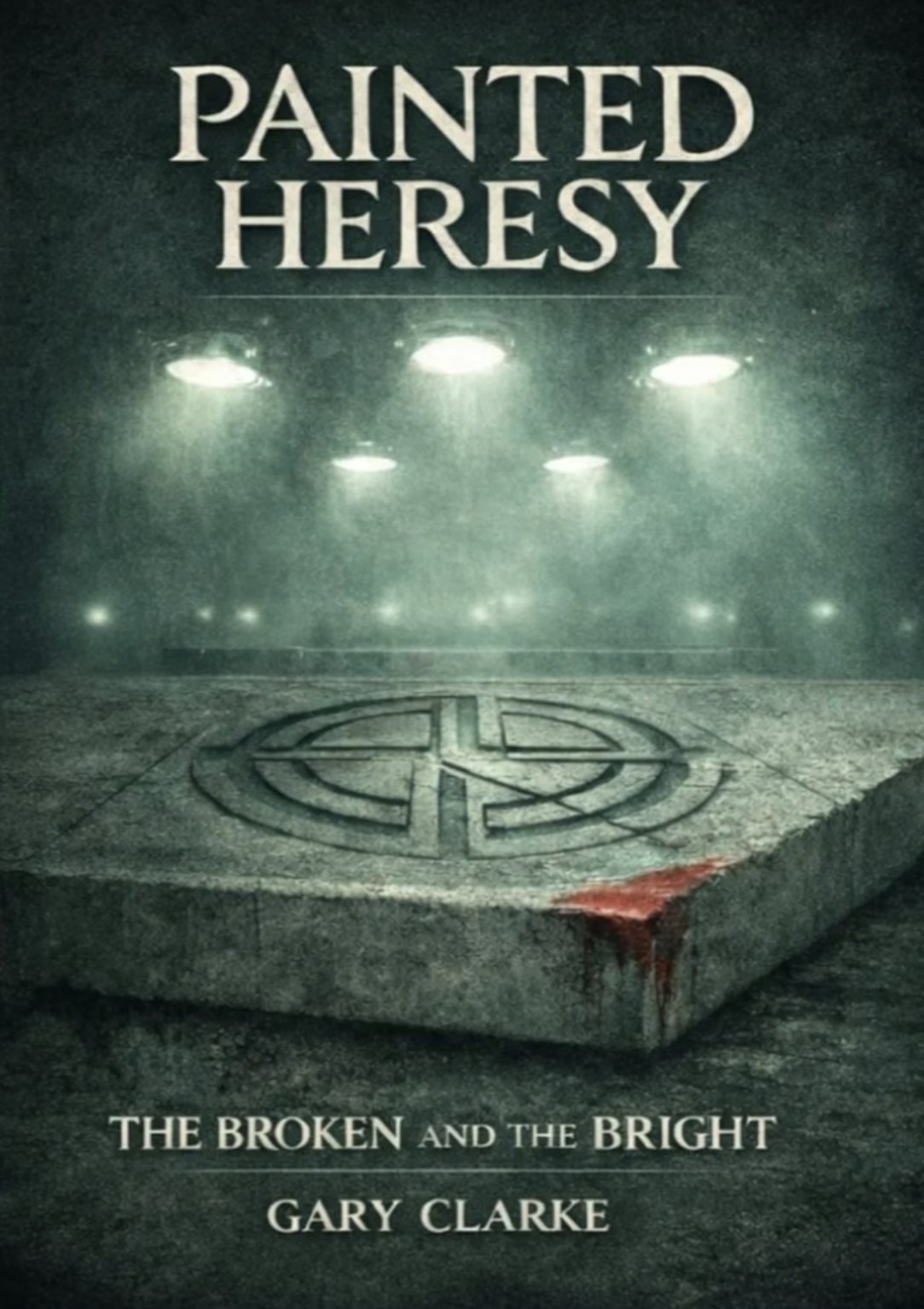
Book one
A dystopian story of faith and control — and the price of leaving a mark.
Sanctum Viridis runs on certainty. Eight parishes. One faith. A city taught to mistake obedience for peace. When Lira Veylan makes a small, forbidden mark of colour, she draws the attention of the Synod and begins to see the city for what it is.
Available now
Paperback and Kindle via Amazon.
Reader response
Read the current Amazon reviews and reader response for The Broken and the Bright.
Honest reviews help new readers find the series and give the broken circle a little more reach.
★
Short excerpts are shown with links back to the original Amazon reviews.
Inside Painted Heresy
Sanctum Viridis is ruled through doctrine, surveillance, and the language of certainty.
A mark drawn to make contact. A signal that says someone else is still out there.
A young woman whose first act of defiance was never meant to become a symbol.
Dispatches
Get book news, cover reveals, launch updates, and early looks at what comes next in Painted Heresy.
About the author
Gary Clarke is the author of The Broken and the Bright, the first book in the Painted Heresy trilogy.
His writing blends dystopian faith, resistance, trauma, and the quiet power of people finding their voice. He lives in the UK.
Contact
For agents, reviewers, rights queries and reader messages, email is the cleanest route for now.